
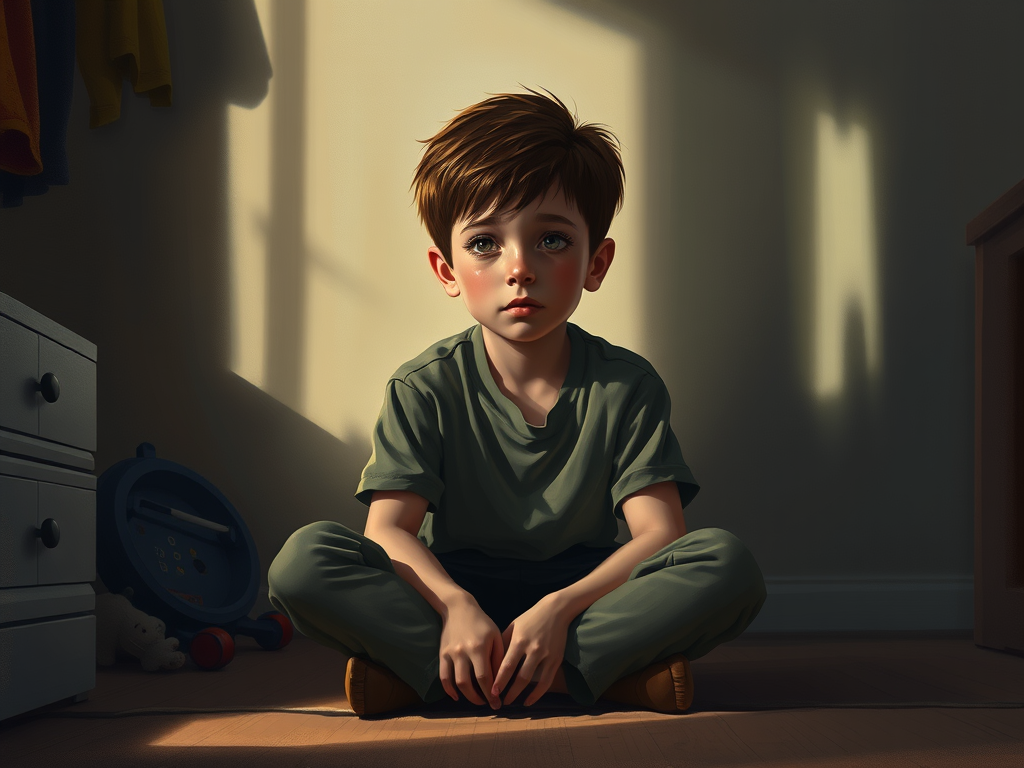
I’ve learned a revealing thing while raising boys. Emotional patterns begin forming long before adolescence. This often happens between the ages of 8 and 12. During those years, I watched the earliest signs of assertiveness, frustration, and what I came to understand as misunderstood anger.
Yelling, stomping, slamming doors—none of it was aggression.
It was communication.
It was their bodies saying, “Something is happening inside me and I don’t know what to do with it.”
This is a critical developmental window. Their hormones are shifting. Their bodies are changing. Their inner world grows louder, faster than they know how to process.
The sweet, gentle child you’ve known for years suddenly collides with emotions that feel too big, too fast, too overwhelming.
I knew this.
I understood this.
And I raised my sons with emotional intelligence at the center.
We talked about feelings. We named them. We practiced slowing down, breathing, and understanding what was happening inside their bodies. I wanted them to grow up knowing that emotions were not something to suppress—but something to understand and move through.
And in doing that, it also taught me something important.
It showed me what happens when boys don’t receive that kind of guidance.
They were fortunate—they had a grandfather who modeled a full, healthy emotional spectrum. They saw what responsibility and tenderness looked like. They saw what self-regulation sounded like. They saw an adult man move through emotion without shame.
But I also knew:
Not every boy grows up with that.
Without guidance, many boys don’t know what to do with what they feel.
And when those moments are met with silence, dismissal, or the familiar scripts boys still hear—
“Don’t cry.”
“Be tough.”
“Man up.”
—those feelings don’t vanish.
They get buried alive.
When a boy experiences emotional pain during these formative years, something essential gets interrupted. If no one teaches him how to sit with it, his emotional development might be affected. He must learn to name it. He also needs to move through it.
He grows physically.
He ages chronologically.
But emotionally, he can remain anchored to the moment he learned to shut down.
So at 10, he might collapse into tears. He could throw himself on the ground. He might scream because it’s the only release he knows.
At 30, he might raise his voice. He might dominate the room. He could also withdraw, numb out, or emotionally disappear. That’s still the only release he knows.
What looks like “overreaction” in a man is often the echo of unresolved pain. This pain belongs to a boy who never had the tools, support, or permission to feel.
This isn’t about blaming men.
This is about understanding them.
So much of what gets labeled as “toxic,” “immature,” or “emotionally unavailable” is actually the result of emotional suppression—not inability. Not unwillingness. Not lack of caring.
Many men simply never learned the language of their own emotions.
So when something small triggers something big, it might not be about that moment at all.
It may be the accumulated weight of everything he was never allowed to say or feel.
And that deserves compassion—
not condemnation.
If we want men to show up with emotional intelligence, we cannot demand that they “just know how.”
We have to go back with them.
We have to tend the parts of them that were silenced.
We have to help them learn what no one ever taught them.
Because emotional maturity is not instinct.
It is learned.
And it is never too late to learn.
— Tawnia Lives.