
By Tawnia Lives
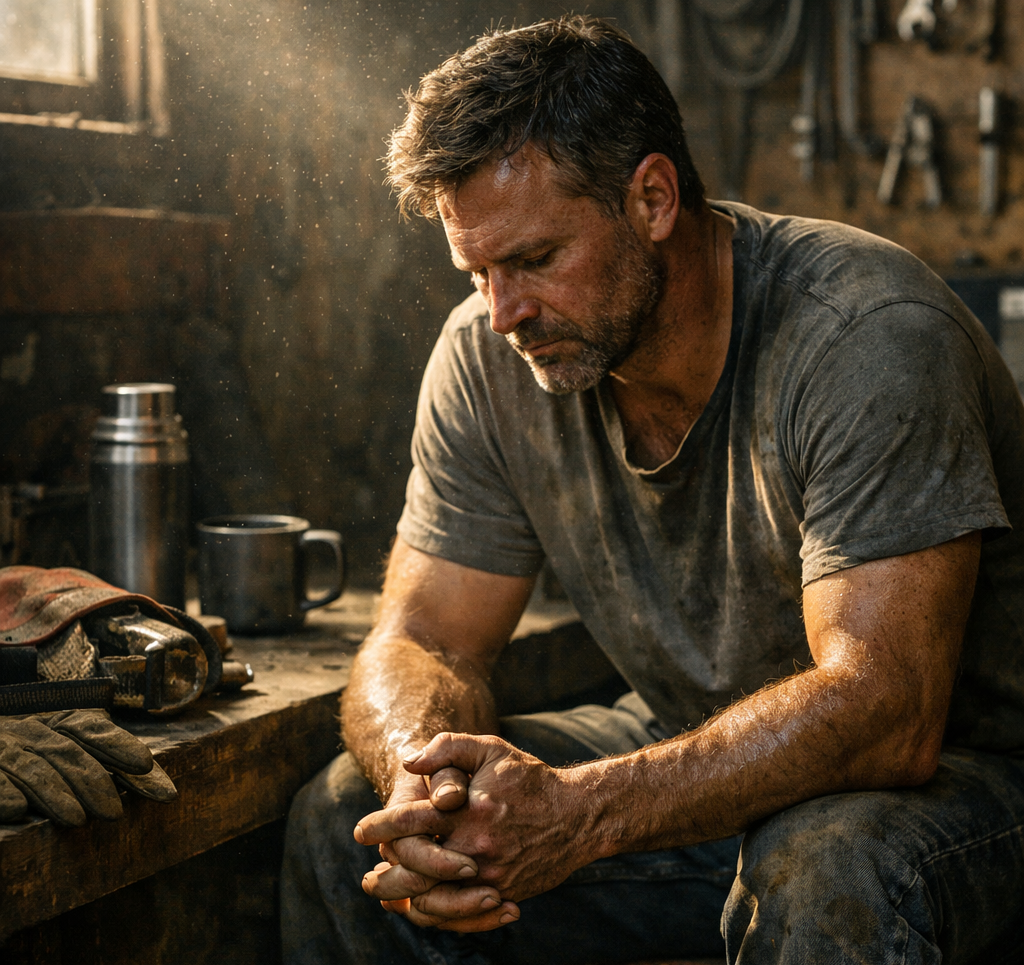
A man’s body learns early that it is supposed to work.
Push through.
Get it done.
Keep going.
Be useful.
Be dependable.
Be the one people rely on.
Somewhere along the way, the body stops being treated like a place you live.
It becomes a tool.
Something to wear down.
Something to spend.
Something to keep running even when it’s tired.
Society doesn’t ask men very often how they feel.
It asks what they can handle.
How much they can carry.
How long they can keep going.
So most men learn to ignore the signals their bodies send.
The tight shoulders.
The exhaustion.
The quiet moment when the breath gets shallow and the mind says, just keep pushing.
But the body has always known what balance feels like.
Even if no one ever told you that you were allowed to listen.
The body remembers rhythm.
Work.
Effort.
Recovery.
Anyone who has ever carried something heavy knows the truth of it.
You can carry a lot for a while.
But if you never set the weight down, something eventually gives.
Balance was never meant to be about splitting things perfectly.
It’s about how the weight moves.
It’s about knowing when the load is too much to carry alone.
It’s about someone stepping in beside you and saying,
I’ve got this for a minute.
Not because you’re weak.
Because that’s how things survive.
The truth most men are never told is this:
Strength was never meant to mean carrying everything without stopping.
Strength is endurance over time.
And endurance requires recovery.
The body knows this instinctively.
Muscle grows after rest.
Breath deepens after stillness.
Focus returns after pause.
But the world often tells men the opposite.
Don’t stop.
Don’t slow down.
Don’t show strain.
So many men keep pushing until their bodies stop asking politely.
Until exhaustion turns into injury.
Until silence turns into distance.
Until the tool finally breaks.
But the body was never meant to be just a tool.
It’s the place your life happens.
It’s the place your relationships live.
It’s the place where love, stress, responsibility, and meaning all pass through.
And balance—real balance—is not about doing less.
It’s about allowing the body to keep going for the long road ahead.
The body doesn’t ask for perfection.
It asks for permission.
Permission to breathe.
Permission to pause.
Permission to acknowledge that carrying the world sometimes gets heavy.
Balance isn’t something you calculate.
It’s something you return to when you stop pretending you can carry everything alone.
The body remembers how to recover.
The mind remembers how to listen.
And when the two finally start working together again—
that’s not balance as the world measures it.
That’s balance as the body understands it:
steady,
strong,
sustainable.
Enough.
— Tawnia Lives